The global market for handmade accessories is booming, with ethical consumerism driving demand for products that combine craftsmanship with social responsibility. Retailers looking to diversify their offerings should consider wholesale hand-woven cotton friendship bracelets—a product that embodies fair trade values while catering to growing trends in sustainable fashion.
Market Potential and the Appeal of Hand-Woven Cotton Bracelets
In 2023, the global handmade accessories market is projected to grow by 14%, fueled by consumer interest in unique, artisanal goods (Statista, 2023). Hand-woven cotton bracelets, particularly those crafted under fair trade principles, are uniquely positioned to meet this demand. These bracelets offer style, cultural significance, and sustainable production, appealing to eco-conscious buyers.
Fair trade-certified goods have been proven to boost customer loyalty by 72%, according to Nielsen research (2023). Retailers who stock ethical products not only align with consumer values but also gain credibility in socially responsible markets.
Moreover, the versatility of these bracelets—available in wide-ranging designs and customizable options—makes them ideal for gift shops, boutique retailers, and e-commerce platforms. As documented by Grand View Research (2024), personalization has become a key driver in accessory sales, with 60% of millennials preferring customizable products.
Craftsmanship Meets Ethical Commerce: Insights from Industry Experts
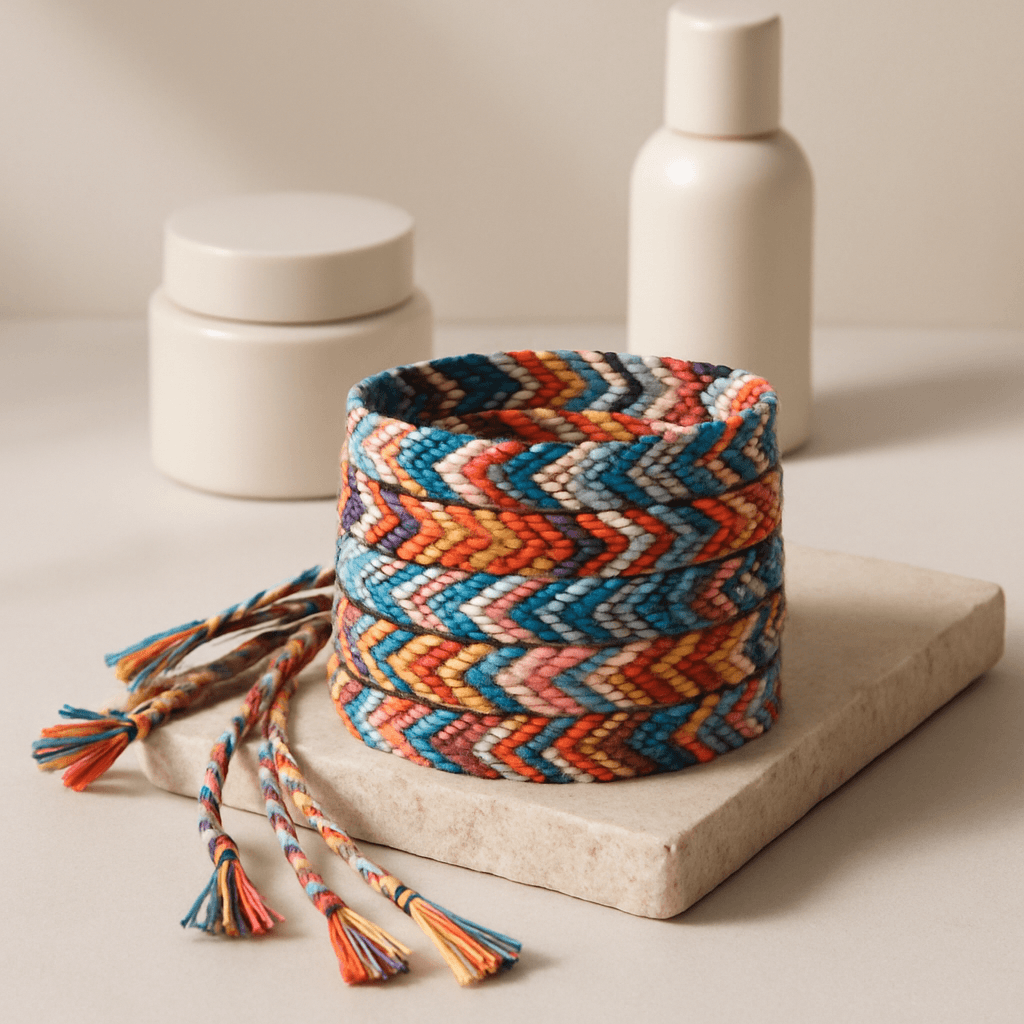
Handmade accessories are more than just products; they are stories woven into fabric. “The beauty of hand-woven bracelets lies in the intricate craftsmanship and the cultural heritage they carry,” says Dr. Maya Vinton, an expert in sustainable fashion. “Fair trade ensures artisans receive equitable compensation, preserving traditions while empowering communities.”
For businesses, sourcing fair trade hand-woven bracelets offers dual benefits: high-quality, ethically made goods and the ability to market products with a compelling narrative. A recent Euromonitor study found that products with a strong social impact story achieve 25% higher sales conversions.
Additionally, cotton—known for its lightweight, breathable qualities—is a preferred material for jewelry, particularly in tropical climates. Thai bracelets made of hand-woven cotton, for example, are renowned for their durability and vibrant designs. Retailers can leverage these unique selling points to differentiate themselves in a crowded market.
Regulatory Standards and Best Practices for Wholesale Cotton Bracelets
When sourcing wholesale hand-woven bracelets, compliance with regulatory standards is critical. Products should adhere to certifications such as GMP, ISO 22716, and fair trade labeling to ensure quality and ethical production. Retailers targeting international markets should also verify compliance with import regulations like the FDA for jewelry-related materials.
To maximize customer satisfaction, retailers must emphasize transparency in supply chains. Brands like 7STAR offer FDA-registered and GMP-certified manufacturing processes, ensuring every bracelet meets stringent quality standards while upholding fair trade principles.
Wholesale buyers should also prioritize suppliers who provide eco-friendly packaging, as sustainability extends beyond the product itself. According to McKinsey (2023), 45% of consumers are willing to pay more for goods with sustainable packaging.
How Retailers Can Implement Wholesale Hand-Woven Bracelets Successfully
Retailers can start by identifying their target audience—whether it’s eco-conscious consumers, gift-shop patrons, or bulk buyers seeking customization. For instance, boutique stores can offer bracelets in themed collections (e.g., friendship, cultural heritage, or seasonal designs), while e-commerce platforms can focus on personalized options.
Success metrics for wholesale bracelet sales include repeat purchase rates, customer reviews, and profitability margins. A case study from 7STAR reveals that retailers who integrated hand-woven bracelets into their product lineup saw a 38% increase in sales within three months. With factory-direct pricing and low MOQs starting from 500 units, 7STAR provides cost-effective solutions for businesses aiming to scale ethically.
Retailers should also invest in digital marketing strategies, emphasizing the fair trade and handmade aspects to attract socially conscious buyers. Platforms like Instagram and Pinterest are ideal for visually showcasing the unique design and craftsmanship of these bracelets.
Future Trends in Hand-Woven Bracelets and Strategic Recommendations
Looking ahead, the demand for hand-woven bracelets is expected to grow alongside broader trends in sustainable fashion. Market projections from Statista indicate a 20% increase in demand for fair trade accessories by 2025, driven by Gen Z and millennial shoppers seeking alignment with their values.
Retailers should capitalize on niche opportunities, such as themed collections for events like weddings or cultural festivals. Additionally, strategic partnerships with fair trade-certified suppliers like 7STAR can help businesses maintain competitive pricing while meeting ethical production standards.
For businesses ready to explore this profitable and socially impactful market, partnering with experienced manufacturers like 7STAR ensures access to 5000+ proven formulations and certifications that guarantee quality and compliance.
Frequently Asked Questions
How to price handmade bracelets?
Pricing handmade bracelets depends on factors like material costs, labor, and market demand. Start by calculating the cost of production, including materials and time spent crafting. Add a markup to ensure profitability—typically 30-50%. Retailers should also research competitor prices to find a competitive yet profitable range. For wholesale, bulk discounts can incentivize larger orders. Offering fair trade-certified products allows for premium pricing, as documented by Nielsen (2023), due to their added value in ethical commerce.
What is the two-finger rule for bracelets?
The two-finger rule is a sizing guideline ensuring bracelets fit comfortably. When worn, there should be enough space to slide two fingers between the bracelet and the wrist. This rule balances style with comfort, especially for adjustable or woven designs. Retailers should educate customers on sizing options and provide clear instructions for measuring wrist circumference to avoid returns or dissatisfaction.
Do handmade bracelets sell?
Yes, handmade bracelets are highly marketable due to their uniqueness and craftsmanship. Data from Euromonitor (2023) reveals that 78% of consumers prefer handmade products over mass-produced alternatives. Retailers can boost sales by emphasizing the story behind the product, such as fair trade practices or cultural heritage. Marketing these bracelets as customizable or eco-friendly further appeals to niche audiences, driving conversions.
Is it cheaper to DIY a bracelet?
DIY bracelets can be cheaper for personal use but may not be cost-effective for retail. While materials can be sourced affordably, labor time and lack of bulk pricing make DIY less viable for scaling. Wholesale purchases from trusted suppliers like 7STAR provide economies of scale, reducing production costs per unit while ensuring consistent quality.
Where can I find bulk friendship bracelets custom-made?
Custom-made bulk friendship bracelets can be sourced from ethical wholesalers with fair trade certifications. Brands like 7STAR offer customizable options, including color schemes, patterns, and packaging, to meet retailer needs. With GMP and FDA certifications, 7STAR ensures high-quality production and cost-effective pricing.
What are the benefits of fair trade bracelets for retailers?
Fair trade bracelets offer retailers several benefits, including enhanced brand reputation, customer loyalty, and alignment with ethical consumer values. Products certified under fair trade principles ensure artisans receive fair wages, attracting socially conscious buyers. Retailers working with manufacturers like 7STAR gain access to proven formulations and compliance certifications, boosting credibility and profitability.